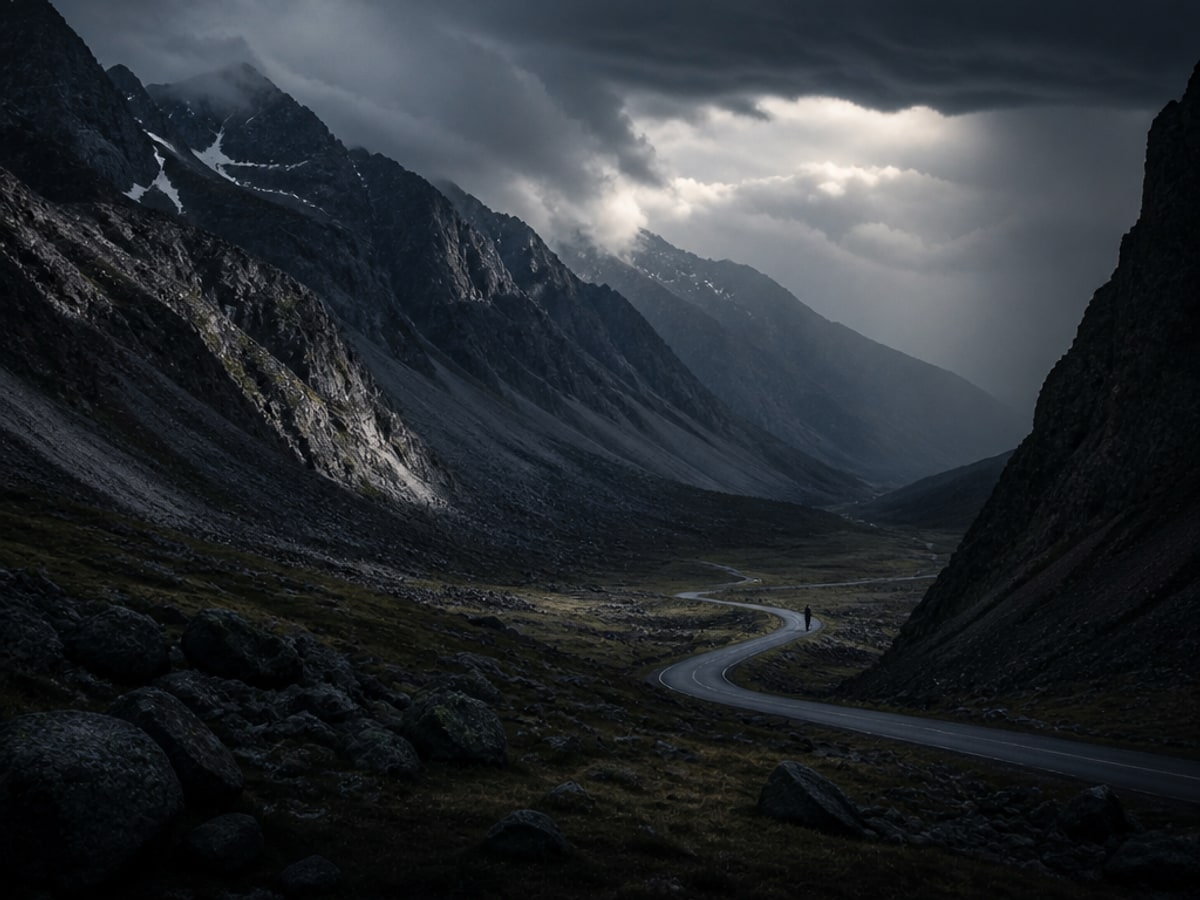
“You’re right” is my phrase of the year for 2026. It’s what my AI says immediately after I point out the obvious.
My AI has a quality control department. It is me.
Most mornings this year began with a machine apologizing to me. It had invented a date, or a quote, or a feature a product never had. I pointed at the mistake, and it said, “You’re right.” I’m still excited about what I can build with these tools. I would also like to spend less of my day checking their work.
I’m doing my year in review before Thanksgiving. It’s been a wild year for just about everyone I know, and technology moved fast enough that I could have written one of these every month.
I keep thinking about Apple Maps in 2012. The app sent motorists looking for Mildura, Australia, toward Murray Sunset National Park, more than 70 kilometres from the town. Victoria Police told ABC News they had rescued six people who became lost while trying to reach it. One couple said they spent five hours there without food or water.
The technology was wrong, but people kept following it. “You’re right” is what the machine says when somebody finally looks up.
The review that had not been reviewed
Around this time last year, we had an encounter with a client who gave us a rejection letter thanking us for the work that they had not yet seen. This year, I'm getting feedback from content that people have not yet reviewed.
Read The Presentation Deck They Never Saw.
Several times this year I got review notes that read like somebody had pasted my draft into ChatGPT or Claude and forwarded the response. I forget which was a script and which was a PowerPoint. The notes missed what we were trying to do, and some were so confidently wrong I felt embarrassed for the sender.
I asked, “Hey, is this AI feedback or is this real feedback?” The answer, give or take a word, was “Just follow the feedback.” I heard that more than once.
I’d have welcomed a phone call with somebody who hated the whole thing and could tell me why. I was embarrassed for them and unsurprised at the same time, which is a strange thing to feel about a colleague.
That exchange gave me a glimpse of agent-to-agent content creation. My agent writes the draft, yours reviews it, and mine makes the changes. By Friday, we have finished the presentation that neither party is prepared to give.
In the first year or so of consumer-grade AI, I was really excited about the possibilities of using it to draft content to save time, but then realized that it just really wasn't very good at that. At the end of the day, at least for me, who's been a writer for most of my life, it was a great research agent, but it just really failed to write with any sort of human substance. Everything felt flat, and that was the work that I was doing with my Humaners lab, where I was studying linguistic patterns. I realized that AI, for me, is much better at building tools, software, and processes than it is at actually creating the content itself. AI doesn't have taste. It doesn't have style. It doesn't have something. That's not to say it won't come. It just doesn't have it now.
Five projects and one person
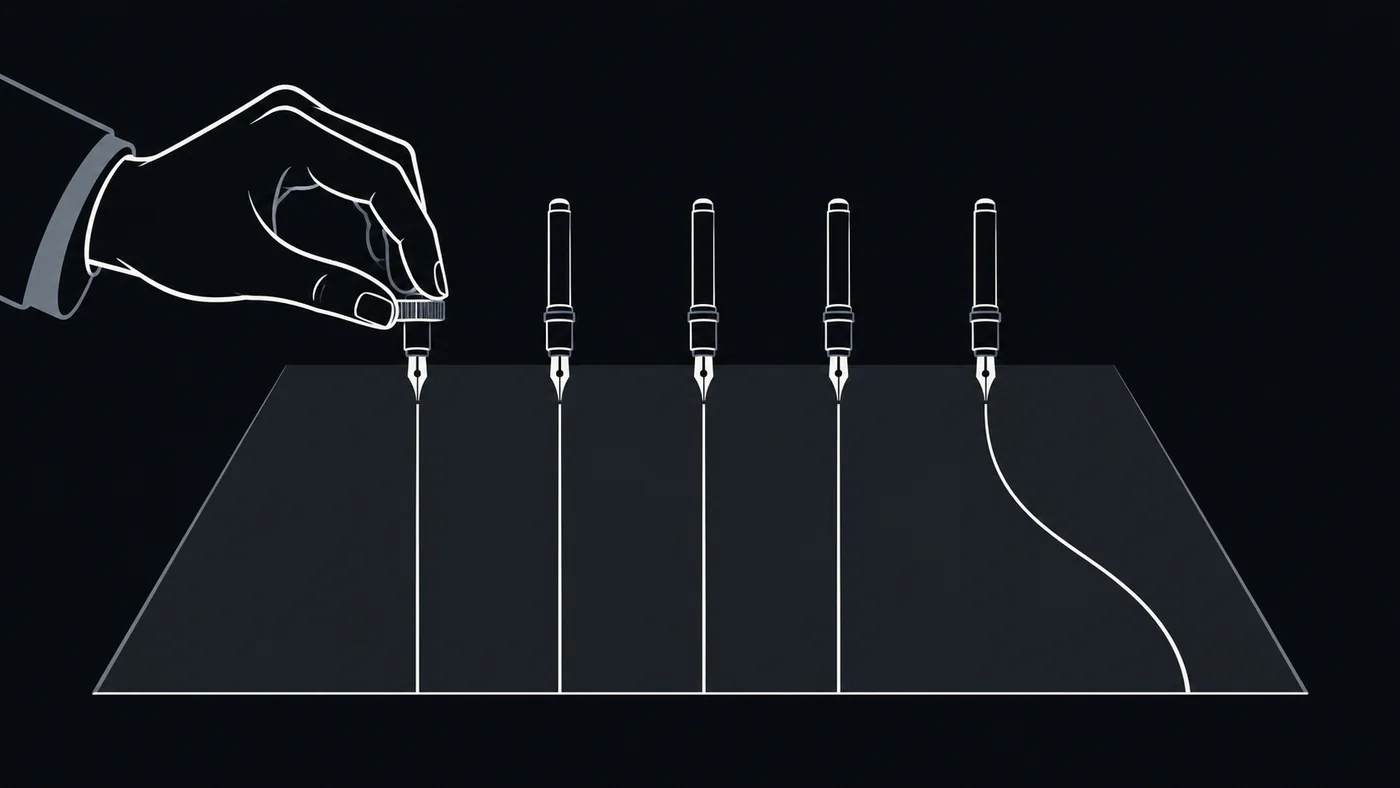
I understand how we get there because I’ve started parallel tasking myself, with five projects moving and only one person checking them. While one agent renders a video, I can start another on a website and get halfway through a fourth project before the first one needs me. Then I have to remember which version I approved, where it went, and what I was fixing.
Anybody watching sees five projects moving. I still have to check them one at a time. By project four, I’m inclined to take a plausible answer and move on. To get to “you’re right,” somebody still has to notice what’s wrong.
Context is not the same as understanding
One of the other things that's really noticeable this year is that context is not the same as understanding, and this is a habit that I'm calling context maxing. You can give a model the brief, the transcripts, and every revision since March. You can also forward its recommendation without learning a damn thing about the subject.
I like asking AI to make the case against a decision I’m considering. I learn where my reasoning needs work, and I can explain the choice afterward. But if we use it to produce the end result without learning anything, we shouldn’t be surprised when a client asks, “If you took my stuff, put it into GPT, and sent it back, why do I need you?”
The feed has become a hall of mirrors
Outside work, my feed has become a hall of mirrors, which is not what I hoped these tools would give us. A year ago, I hoped we were headed for a revival of the homemade internet. A photographer could publish twenty years of work in whatever order made sense to her. Anyone with the technical aptitude could build a site or a video in an afternoon.
We got the tools. Judging by my feed, we’ve mostly used them to make more of whatever worked on Tuesday.
We’ve run out of content. I can scroll for half an hour and come away with the impression that I’ve watched the same influencer six times, in six different kitchens. If I linger over an argument, I get more of it, until my own opinion starts to look like the general consensus. The feed hands each of us a mirror and calls it a window. Then an otherwise reasonable person disagrees with me in the real world and somehow they’re the one acting peculiar.
People still surprise the internet
For all that repetition and anger, people still use the internet to help strangers, and those were the stories that stayed with me this year. In Michigan, strangers raised nearly $785,000 for Walt Zerod, a Red Baron delivery worker whose confrontation with a cruel prankster had gone viral. Zerod paused the fundraiser and asked people to put their generosity toward someone else.
In Tennessee, Brittany Smith saw her 78-year-old DoorDash driver, Richard Pulley, struggling up her front steps on a doorbell camera. She found him and brought him a $200 tip. She later started a fundraiser that drew support from thousands of strangers. Here in Minnesota, Joe Carr’s annual lemonade stand has raised nearly $100,000 for Gillette Children’s Adaptive Bike Fund.
Positivity still sells, and nobody has worked out how to manufacture it, which is inconvenient for the people trying. I like an internet that can get a kid on a bicycle.
What I meant when I started Unplug
Those stories are closer to what I want from Unplug, the project I started nearly twenty years ago to encourage people to put their phones down between calls. Treat the phone as a communication device and a gentle tool. These days I’m more interested in what we do when we pick it up.
Use it to interact with people instead of consuming them. Create for yourself and never for the algorithm. You don’t need a million followers, and if you want to be good at something and fame isn’t the goal, you make stuff and the followers can do as they please.
A few bets on the next year
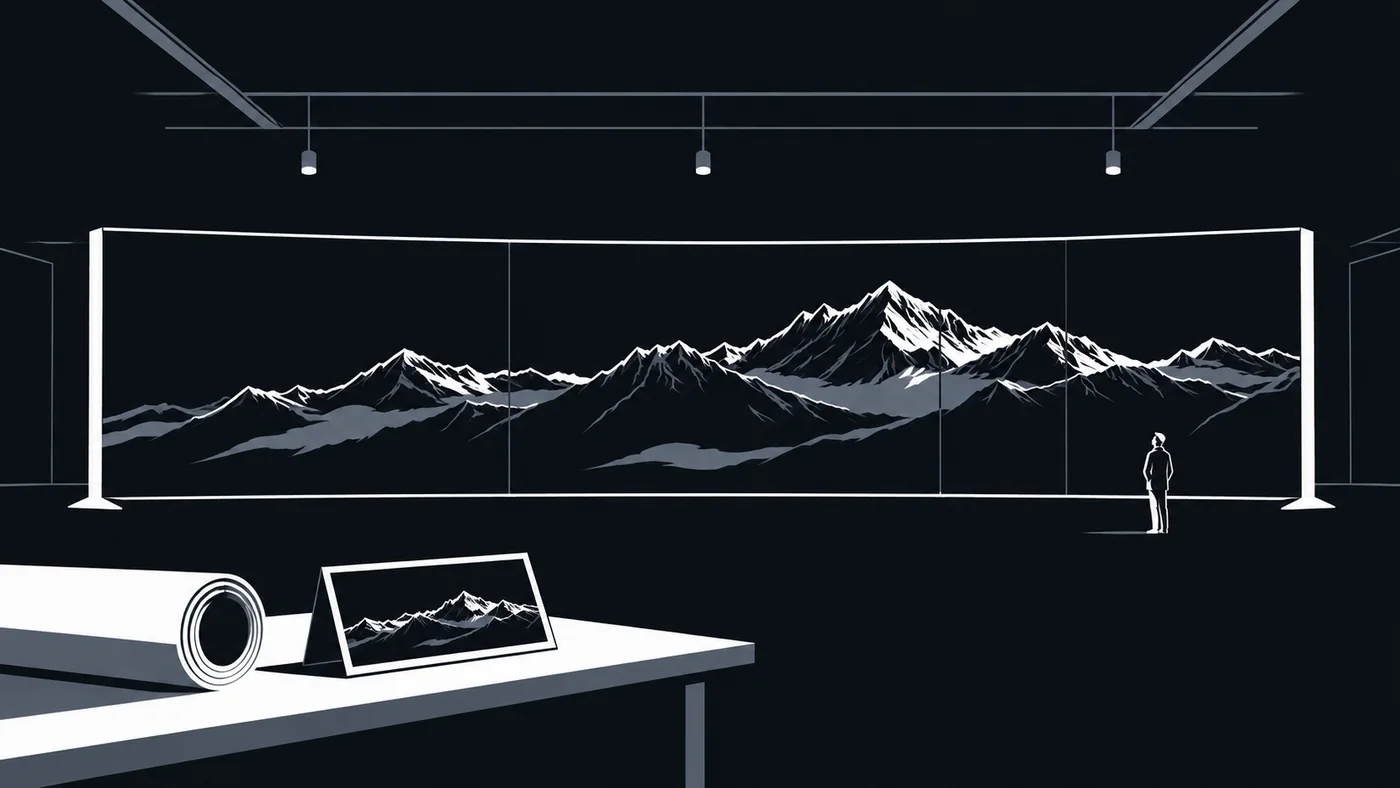
Looking ahead to the next twelve months, I expect the mechanics of traditional video editing to be nearly obsolete. If I ran a shop that billed for cutting clips, adding captions, and resizing the result, I’d diversify now. People will lose work in that transition. I’d still hire the editor who knows to hold a shot for three more seconds because somebody is about to say what they mean.
I also expect a bumper crop of tiny digital startups. I’d take a second look at businesses that make physical things or repair the ones people already own. If I were building software, I’d look abroad for a trade or a language that existing tools serve poorly. I’d want a local partner who knows what people there would pay to fix.
Microsoft’s Q1 2026 AI diffusion report put the share of working-age people using generative AI at 70.1 percent in the United Arab Emirates, 63.4 percent in Singapore, and 31.3 percent in the United States. That is one measure, based on Microsoft telemetry and its own adjustments, not a complete picture of what anyone knows or uses. Still, it is a useful correction to the assumption that every new digital idea should begin at home.
The time we do not take
Beyond what happens to our jobs, my biggest worry for 2027 is the stress I hear in my professional circle. Anxiety, sleepless nights, and the feeling that time is accelerating keep coming up. People aren’t taking time for themselves, even to stop and pause.
I think anxiety will be one of the hardest things we’ll have to manage. People already expect an answer in the time it takes to generate one. Add a steady diet of outrage and convincing fakes, and nobody leaves room to think. I write these year-end reflections partly to quiet my own head. I miss having an afternoon to think about a problem before anybody expects a solution.
I want to make some pretty dramatic changes in that area in the coming year. I want more time to do things for myself, and I want to stop and pause instead of finding another job to fill the gap.
The afternoon I want back
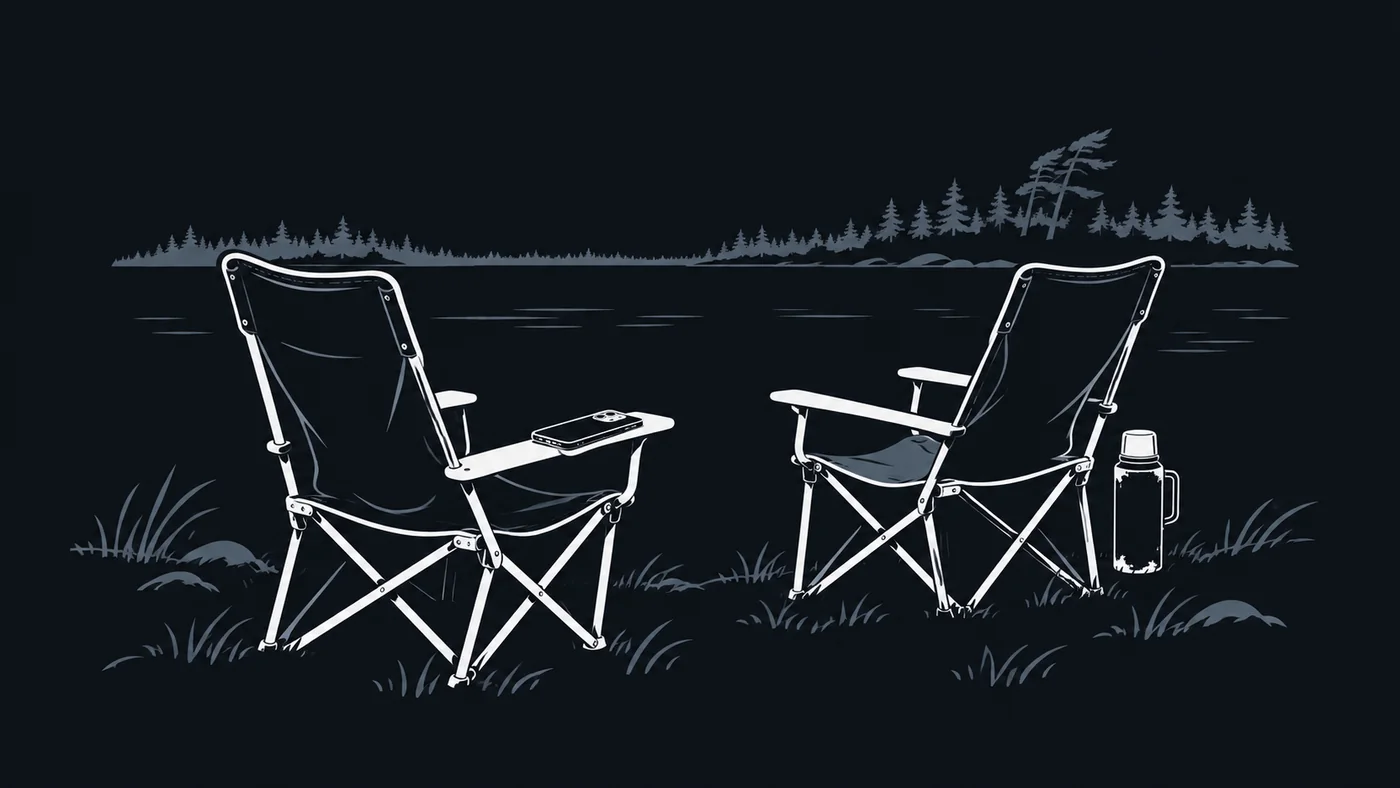
What I want back next year is an afternoon I can spend on something that isn’t work. I think more of us will dust off an old camera and take it outside in 2027, partly for the pleasure of having one thing to do. I’ve got a few stories from this year that will be fun to tell when I can. Meanwhile, I’m working on a photo project that puts me back in the frame with my younger self. I can make those pictures for an audience of one.
Jobs will change. The people who learn to use AI in every part of their life as a way to free up time, and never as a way to do more work, will be the ones to watch. I just need a free afternoon, and I’d like to keep the next one my software saves me.
I even miss seeing what my friends had for lunch on Instagram. If you’re making something good for Thanksgiving, send me a picture. I’d love to see what’s on your table.
What I will be exploring next year
Beyond that free afternoon, there are five things that scare me about next year and five that give me hope. They are fears and hopes, not predictions I can prove.
Five things that scare me
Everything is hackable. That’s the possibility that scares me as more of our lives depend on technology.
Disruption becomes commonplace. There are a bunch of immoral people roaming the Earth who now have access to technology that required a basement full of computer nerds just two years ago. I fear disruptive actors will become commonplace.
The moat becomes the regulation. I worry about the consolidation of AI into its own moat, with regulations designed not to slow the companies already there but to slow everyone else.
Humanity gives up on itself. I fear that when AGI arrives, people in professional services and knowledge work will feel inferior to computer systems. I think there will be a lot of cognitive dissonance, and I worry about what that does to people.
I fear AI itself. Even while I’m using it, I fear AI itself.
Five things that give me hope
More time with friends and family. I’m really excited to spend more time with friends and family.
Working with people I respect and enjoy. I want to spend more time working with people I enjoy and respect. People who know our strengths and weaknesses, are open and honest about them, and lift each other up rather than tearing each other down.
A return to doing things together. I’m optimistic that people will return to analog activities, even digitally enabled ones. Going to a movie theater, playing games with each other, adventures, road trips. I’m hopeful about that.
Politics leaves some room for the rest of life. This may be a little pie in the sky, but I hope politics stops being something everyone thinks about all the time. When I was a political science major, it felt like a tiny fraction of people even followed government. I’d like less time with 24/7 cable news and internet commentators streaming from their basements trying to get famous.
Freedom from the trap of time. I hope that the advancements of technology will help free people from the trap of time.
The phrase of the year belongs to the people who were still paying attention. Stay one of them.
Reporting and context
The reported stories and figures I refer to above come from these sources. Mediaite’s report on Walt Zerod’s fundraiser; WSMV on Brittany Smith and Richard Pulley; CBS Minnesota on Joe Carr’s lemonade stand; the Microsoft AI Diffusion Q1 2026 report; and ABC News on Apple Maps sending motorists toward Murray Sunset National Park.